How to Build a Portfolio That Gets You Hired
A step-by-step guide to creating a developer portfolio that stands out and gets results.
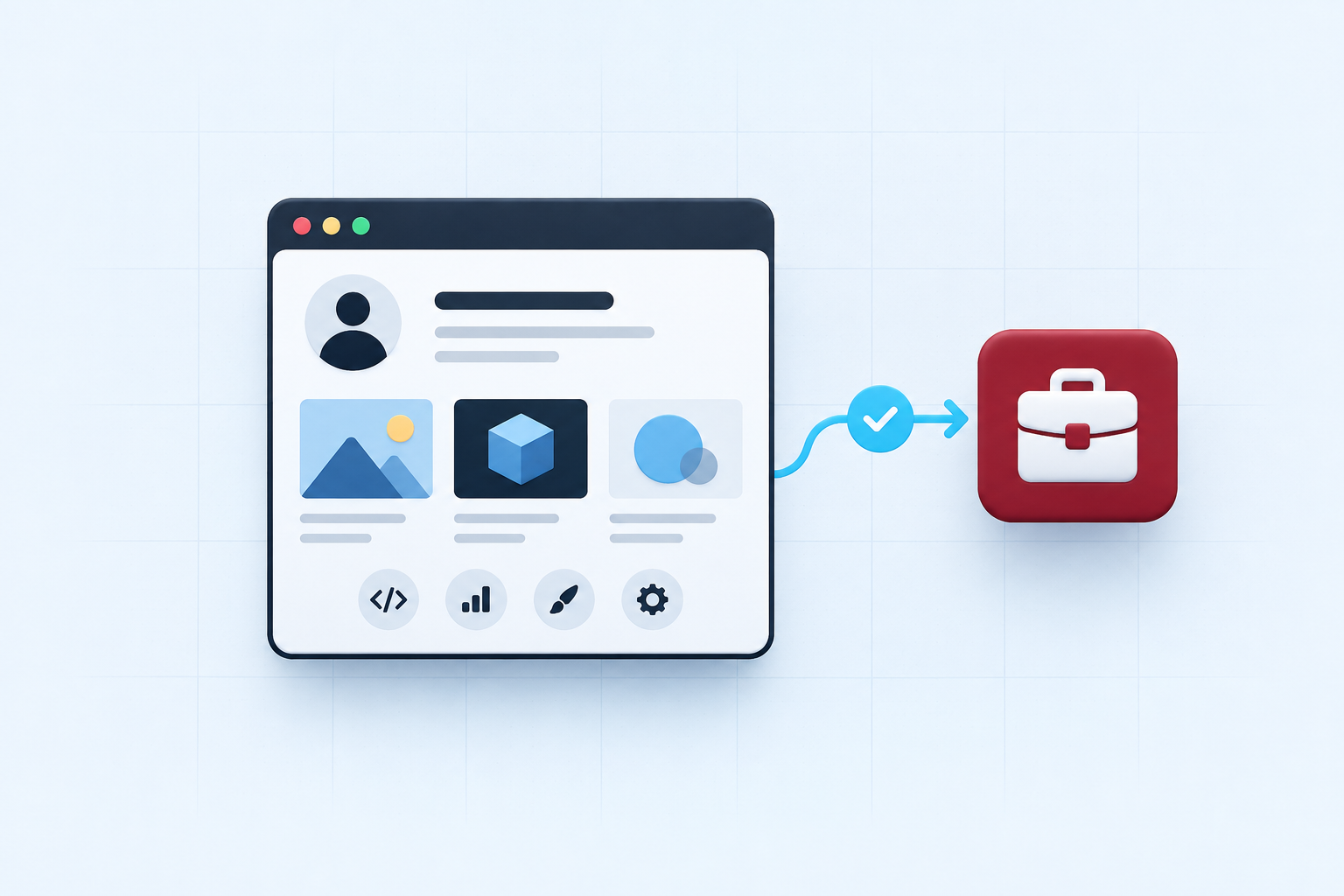
Most developer portfolios fail for the same quiet reason. They show what got built, not what problem it actually solved. A recruiter skims for maybe fifteen seconds before deciding whether to keep reading, so the first thing they see has to earn the next fifteen.
Lead with the outcome, not the stack
"Built with React, Node, and MongoDB" tells a recruiter nothing about how you think or what you're capable of. "Cut checkout time from 40 seconds to 12" tells them everything they actually care about. Rewrite every project description so the result comes first, in plain language, and the tech stack follows as a supporting detail rather than the headline.
This applies even to small projects. "Built a to-do app" says nothing. "Built a to-do app after noticing my own task list kept growing faster than I could clear it, and cut my own daily planning time in half" says a lot more, and it's honest.
Three deep projects beat ten shallow ones
A portfolio with three well-explained projects reads as far more credible than ten half-finished side projects with a screenshot and one line of description each. Pick your best work and actually explain it properly: the problem you were solving, what you tried first, what didn't work, and what you changed your mind about along the way. That kind of detail is what separates someone who followed a tutorial from someone who genuinely built something.
Show the messy middle, not just the polished result
A clean final screenshot proves you can finish something. A short note on a bug that genuinely stumped you, and how you eventually tracked it down, proves you can actually debug and think under pressure, which is most of the real job. Add one honest "here's what went wrong and how I fixed it" note per project. It's more memorable than any polished feature list.
A portfolio's job is to earn a conversation, not to prove you already know everything.
Make it effortless to reach you
Your email, LinkedIn, and GitHub should be visible without a single click. If someone likes your work at 11pm on a Sunday, don't make them hunt through a contact form or a buried footer link to tell you so. The easier you are to reach, the more likely that moment of interest actually turns into a message.
Try this today
Open your portfolio right now and rewrite the first line of your top project so it leads with the result, not the stack. See how different it reads.
Enjoyed this article?
Get practical tech tips and African tech news straight to your inbox. No spam, unsubscribe anytime.
Subscribe to Techmin