From Lagos to the World: Nigerian Startups Leading Global Innovation
Meet Nigerian startups breaking boundaries and putting Africa on the global tech map, and what their playbook actually teaches the next founder.
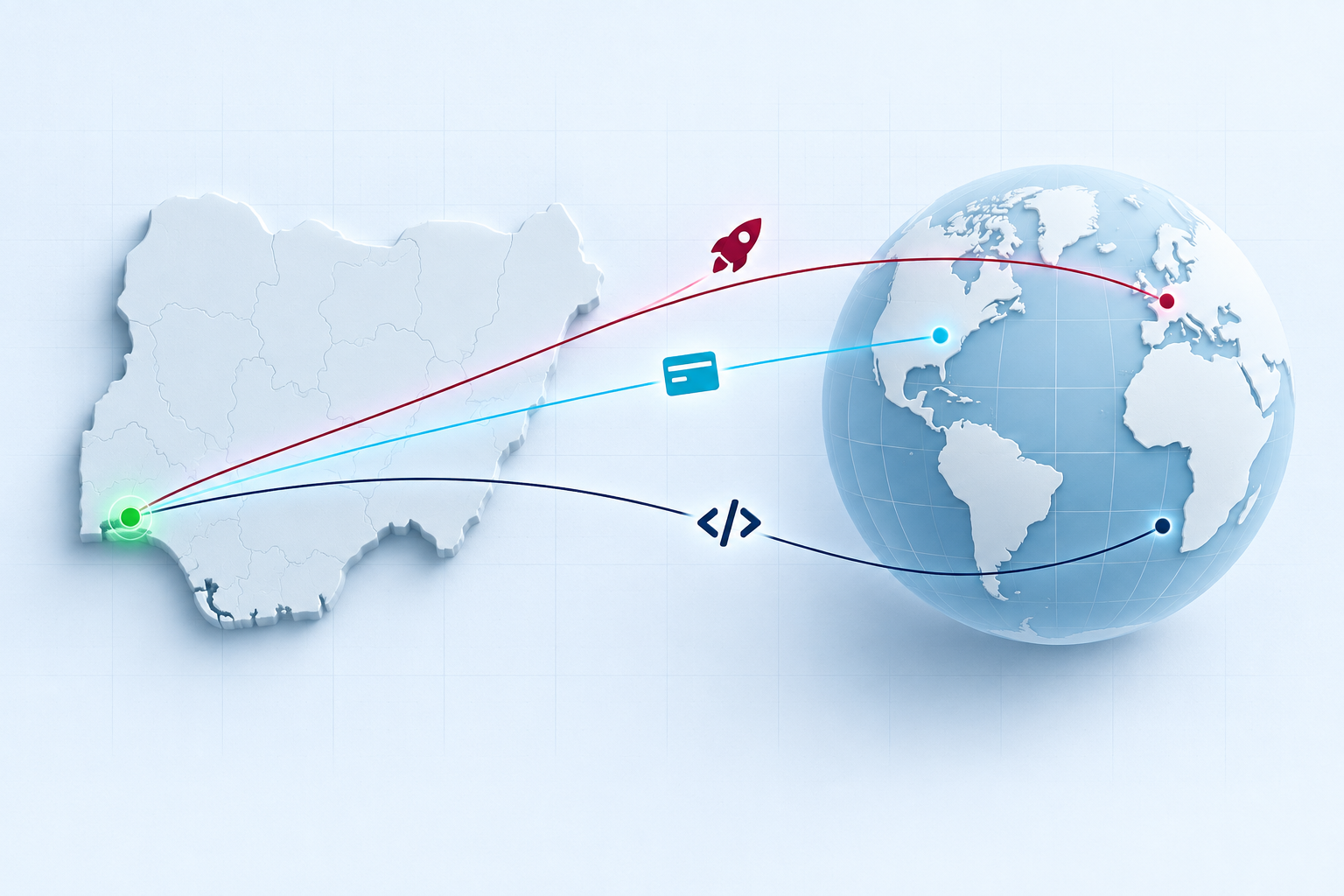
Ten years ago, "Nigerian startup" wasn't a phrase that meant much to a global investor sitting in San Francisco or London. That's changed, and it didn't happen by accident or by luck. It happened because a handful of companies proved something specific, one thing at a time, and everyone building after them got to stand on that proof instead of starting from zero.
Fintech opened the door first
Flutterwave and Paystack didn't just process payments well, they proved that African-built infrastructure could handle serious transaction volume and serious money, not just serve a small local niche that global players would never bother noticing. That mattered more than any single funding headline you might remember from the time. It told the next generation of founders that building for Africa first didn't mean staying small forever, and that global attention would eventually follow real scale rather than the other way around.
What's easy to miss now is how unlikely that felt at the time. Payment infrastructure is one of the least forgiving categories to build in, any downtime or bug touches real money instantly, and there's no room for the "move fast and break things" approach that worked for a photo-sharing app. Getting that right, at scale, in a market with patchy banking infrastructure, was the actual technical achievement. The funding came after the trust was already earned, not before.
Talent became an export too
Andela took a completely different route. Instead of shipping a product abroad, it sent vetted, well-trained engineering talent directly into global remote teams. That single move reframed how the rest of the world saw Nigerian developers. Not as a cheap labor pool to outsource routine work to, but as engineers capable of working at the exact same bar as anyone sitting in New York or Berlin, just based somewhere else entirely.
This mattered for reasons beyond any one company. Once a global engineering manager had one genuinely excellent experience working with a Nigerian developer, the next resume from Lagos got read differently. Reputation compounds slowly and then all at once, and this is a big part of why remote tech work from Nigeria feels far more normal today than it did a decade ago.
The startups getting global attention aren't copying Silicon Valley. They're solving problems Silicon Valley never had to think about.
The next wave is boring, and that's genuinely good news
Early Nigerian tech success stories were mostly consumer facing, apps regular people used directly on their phones. What's attracting serious, patient investment now is the unglamorous infrastructure sitting underneath everything else: identity verification, logistics coordination, cross-border payment rails, compliance tooling. The unsexy layer that other founders quietly build their entire businesses on top of, the kind of company that never trends on Twitter but ends up processing more transactions than anyone realizes.
Infrastructure doesn't get a viral launch moment. It gets adopted slowly by other builders who need it to work reliably, and that's usually where the real, durable value ends up sitting long after the flashier consumer apps have faded.
What global success actually required, underneath the headlines
Strip away the funding announcements and a pattern shows up across nearly every Nigerian company that made it onto the global stage. They didn't start by trying to look like a Silicon Valley company. They started by solving a specific, unglamorous, local problem extremely well, often one that a foreign-built product had already tried and failed to solve because it didn't understand the market. Only after that local problem was genuinely solved did the pitch to global investors become believable.
This is the part that's easy to skip when the story gets told after the fact. It looks, from the outside, like these companies decided to "go global" and then did it. In reality, going global was mostly a side effect of first going deep, deep enough into one real problem that the solution turned out to generalize far beyond where it started.
If you're building something right now
You don't need to relocate to be taken seriously by investors anymore, and you don't need a Silicon Valley address anywhere on your pitch deck. What global investors and partners are actually looking for is evidence that you solved a real, specific local problem well enough that the solution generalizes to other markets. Start there, get that proof first, before you start pitching anyone outside Nigeria. The companies that skipped this step and tried to look global from day one are, almost without exception, not the ones anyone remembers five years later.
Try this today
Write down, in one honest sentence, the specific local problem your product solves. If you can't do it in one sentence, that's the gap worth closing before you write a single line of a pitch deck.
Enjoyed this article?
Get practical tech tips and African tech news straight to your inbox. No spam, unsubscribe anytime.
Subscribe to Techmin